The census
The catalog is deliberately small: 14 roles, each with a real job and a stated impact, instead of a sprawl of near-duplicates. Broad roles load specializations per task rather than multiplying cards: the Developer loads backend, frontend, or mobile depth when the task calls for it; the Analyst loads business, cost, SEO, or marketing framing; the Operator covers CI/CD, deployments, releases, reliability, and incident response.
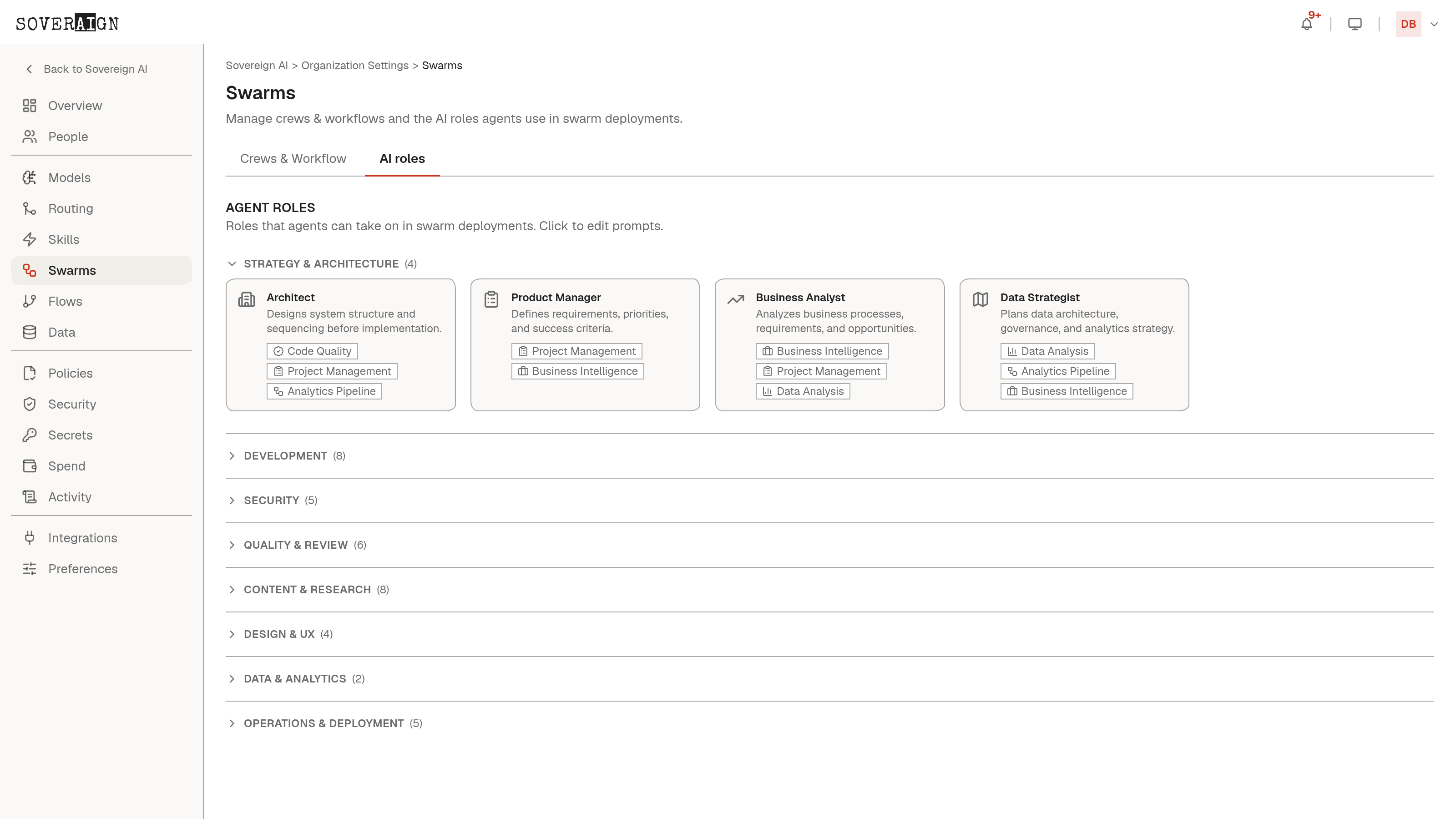
- →Plan: Architect, Product Manager. Structure and acceptance criteria before execution starts.
- →Build: Developer, Designer, Writer, Data Engineer. The people who produce the deliverable.
- →Analyze: Analyst, Data Scientist, Performance Analyst, Security Analyst. Evidence before opinion.
- →Govern: Reviewer, Compliance Officer, QA Engineer. Fail-closed gates with evidence-backed verdicts.
- →Operate: Operator. Owns the pipeline that ships it and keeps it reversible.
Govern is load-bearing, not decorative. The Reviewer is a fail-closed release gate spanning code review, security verification, and accessibility conformance. The Compliance Officer maps regulatory frameworks such as SOC 2, HIPAA, GDPR, PCI DSS, and the EU AI Act to your data and jurisdictions, and issues evidence-referenced verdicts an external auditor can consume. Alongside the 14 roles, model utilities cover search, image analysis, image generation, and documentation.
One truth, every surface
The same census module backs the Agents page, the Launch Swarm modal, template cards, the composer, and flow nodes, so the labels can never drift per surface. Work recorded under an older, more granular role name resolves to its census role with the specialization noted, for example Operator with an SRE specialization, so history stays legible without a second vocabulary.
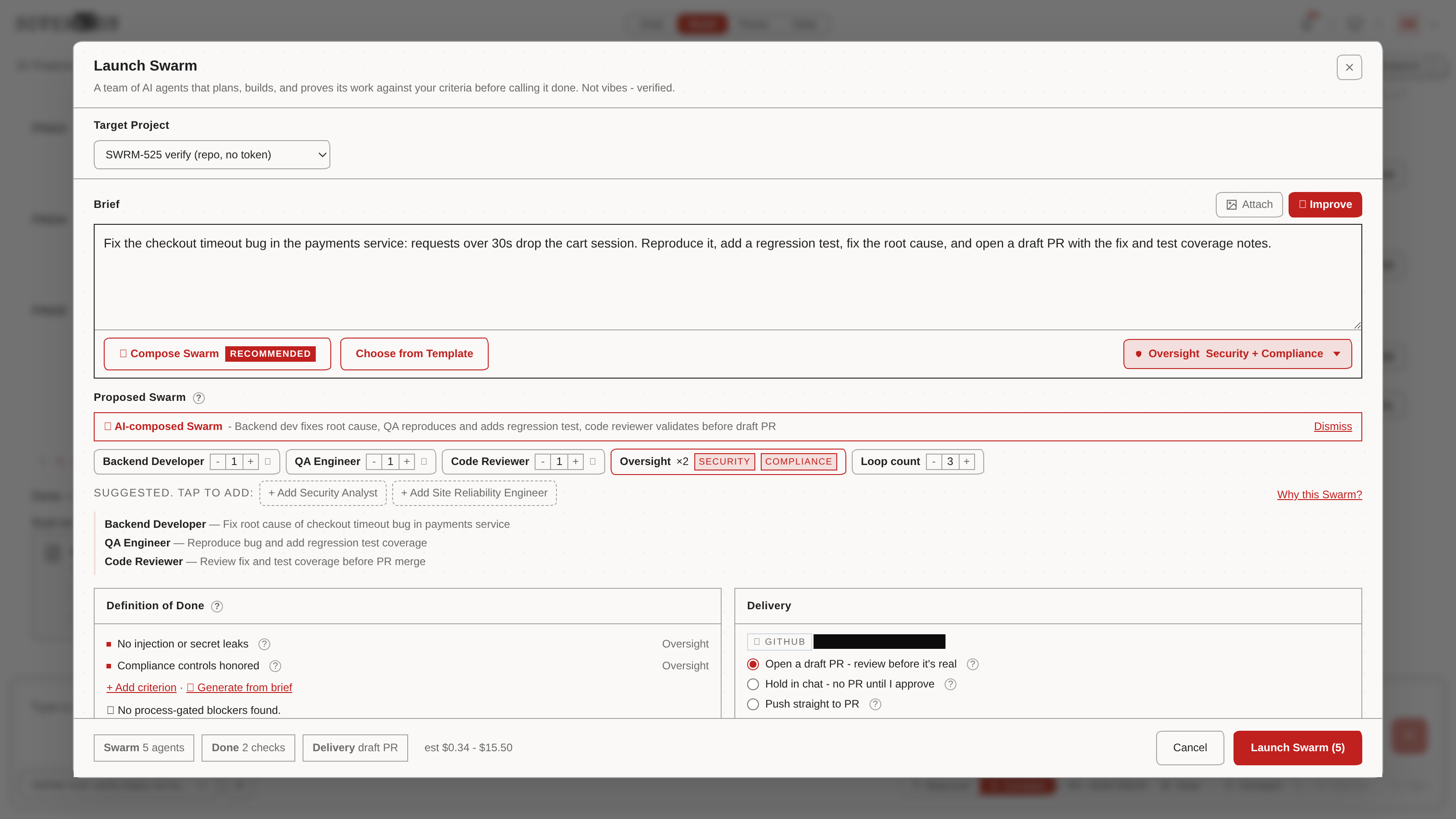
Editing a role
- 1Open the Agents page and find the role card.
- 2Open the role to edit its prompt and model assignment. The prompt editor supports a swarm-name placeholder and shows a live character count.
- 3Pick a model, or leave the role on Auto: the recommended default that delegates to the platform’s resolution chain. When Auto is selected, the editor prints what the chain currently resolves to, the same string the role cards show, so the effective model is never a secret.
- 4Save. A saved model preference that later leaves the catalog still renders as the selected value instead of silently displaying something else, so nobody auditing cost later trusts a stale model label that quietly changed underneath them.
Roles and phases
Every role carries a canonical phase: build, review, or gate. When the AI composes a crew from a brief, phases are derived from each role’s canonical phase in build, review, gate order, so a composed crew gets exactly the same gate machinery a catalog template gets. Composition is never a shortcut around governance.
Skills
Curating skills at the org level keeps an unapproved command out of an agent's hands before it runs, not after. A CISO can block a skill org-wide before any agent ever tries it - governance at design time, not incident response.
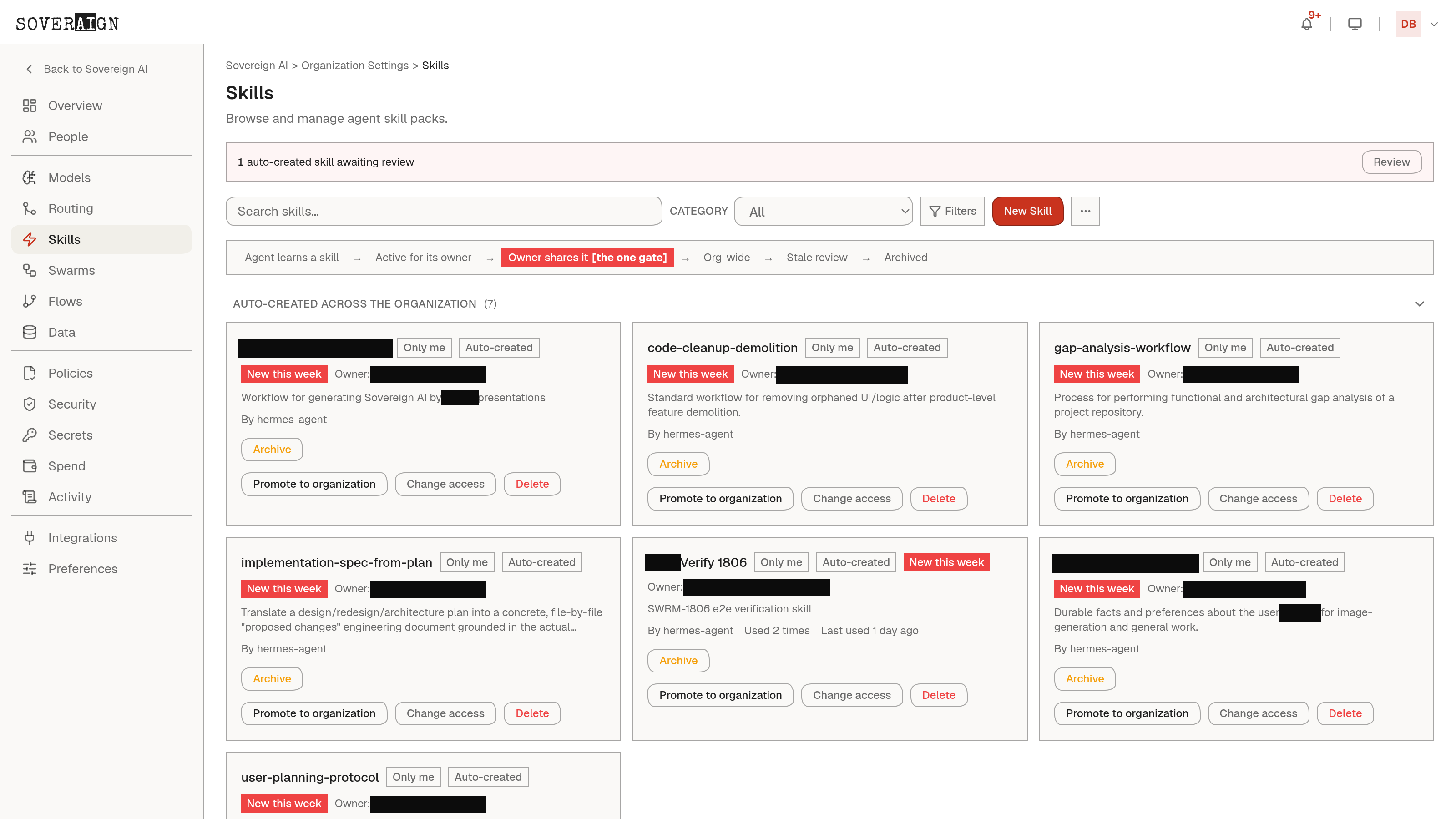
Roles can carry skill packs that extend what an agent knows how to do, including verbatim specialist prompts absorbed from the older granular roles. Skill badges appear on role and agent cards where packs are attached.
The census is served by the platform and fails closed: if the client cannot confirm which census the server runs, it renders the legacy catalog rather than guessing.